FedEx enters quick commerce without building a quick commerce network
FedEx Same Day Local promises two-hour delivery, but the service runs on OneRail's orchestration platform and a pool of more than 1,000 outside carriers. Here is why that is the smart way in, and where it falls short.

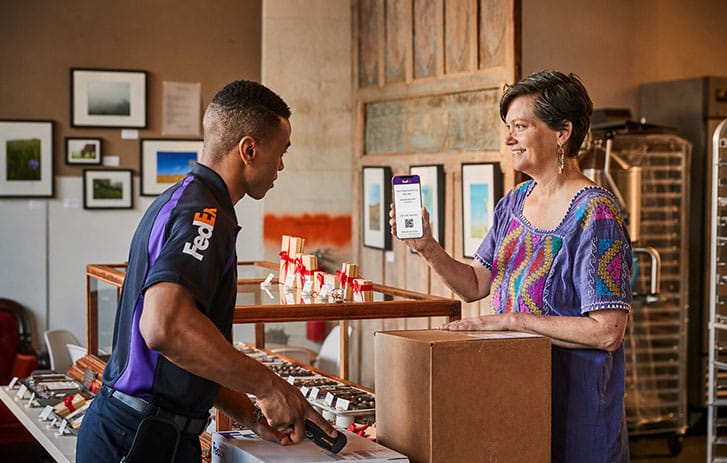
FedEx has launched FedEx Same Day Local, an on-demand service offering two-hour or end-of-day delivery. It is the company's first real move into quick commerce, and it arrives on the back of a strong run: the €9.2B InPost consortium deal, the return of Amazon as a customer, a technology-heavy returns push with Parcel Lab, and earnings that have repeatedly beaten estimates. The stock is up roughly 75% over twelve months and FedEx now carries a larger market cap than UPS.
The service is not built on FedEx's network
The notable part of the launch is not the two-hour promise but who fulfils it. FedEx has partnered with OneRail, a delivery orchestration startup that closed a $42M Series C in December 2024 and already connects to more than 1,000 carriers.
The arrangement looks like a white-label or co-operated service. FedEx acquires the shipment and owns the branded customer experience. OneRail's platform then routes the order to whichever provider can meet the window, and most of those providers sit outside FedEx's network, including a substantial share of gig delivery fleets.
In other words, FedEx is selling capacity it does not operate. For a company whose identity is its own aircraft, hubs and drivers, that is a meaningful departure.
Why FedEx cannot just build this
Quick commerce runs on a different playbook from parcel delivery, and FedEx is missing all three of its core pieces.
Drivers at a different scale. Running tens of thousands of in-house drivers is a parcel problem. Meituan in China coordinates around 7.5 million couriers. That is not a bigger version of the FedEx Ground network; it is a different kind of system, and it is the reason on-demand players lean on gig supply.
Dark stores and micro-fulfilment. In markets where quick commerce is mature, the volume is groceries, daily essentials and high-frequency items such as consumer electronics, staged in small urban nodes. FedEx has no such footprint, and it is not yet clear whether it intends to build one or to plug into retailers who already have it.
A digitally native operating model. The businesses that win here own customer acquisition, orchestrate millions of couriers in real time and forecast inventory across hundreds of micro-nodes. That is a data and AI problem before it is a logistics problem.
Given that gap, partnering rather than building is the rational choice. It gets FedEx into the segment quickly, at low capital cost, without pretending its existing infrastructure can be repurposed for it.
The competition is not UPS
The players FedEx is now measuring itself against are DoorDash, Uber and Instacart, plus a long tail of companies born in instant delivery. These are technology companies with logistics attached, structurally closer to Amazon than to UPS or USPS. FedEx will find the fight harder than anything it faces in parcels.
But the segment has grown too large to ignore, and Same Day Local is best read as a hedge against being locked out entirely rather than a bid to lead. Expect further partnerships, and watch whether FedEx eventually addresses the micro-fulfilment gap itself, because orchestration alone does not give it a durable position.
Sources
- Ecommerce Logistician , April 28, 2026 (ecommercelogistician.com)
- Business Wire , December 4, 2024 (businesswire.com)
Reported and summarised by umtoz.com. Links go to the original publishers.